

I Analyzed My LinkedIn Posts From the Last 4 Months… And Here Are the Results
I maintain a record via a Google Sheet of all the posts I've made since October 2025.


I have recently begun an experiment on LinkedIn, using my face in one post every month. About 3 months ago, I cringed at that idea.
Not because it was bad—it just made me uncomfortable.
Ironically, these posts have been my best performing posts everrr...
The strange thing is that the stuff that makes you uncomfortable is exactly what works (most of the time, especially if you’re not a jerk about it). Predominantly because this is the content that cuts through the noise.
An Analysis of My Content in the Last 4 Months
I maintain a record via a Google Sheet of all the posts I’ve made since October. (I’ll mainly be talking about LinkedIn since my Substack is very recent—follow me here.) Previously I used Taplio for analytics and post scheduling, which was also helpful. But I find it simpler to manually enter the data and upload it in a custom Claude project to give me the patterns.
This is what an analysis of 23 posts from Oct 2025–Jan 2026 says.
Three factors consistently drove performance:
Personal Experience/Story + Image = 2,164 avg impressions, 42.2 avg engagement (comments + likes)
Reflection Tone = 51% more engagement than Contrarian tone (I will explain what this means in the next section)
An image of me = My top 2 posts (3,931 and 2,442 impressions) featured an image of me.
What Actually Changed
Change 1: Adding My Face (Despite Hating It)
Before: Marketing theory posts with generic graphics
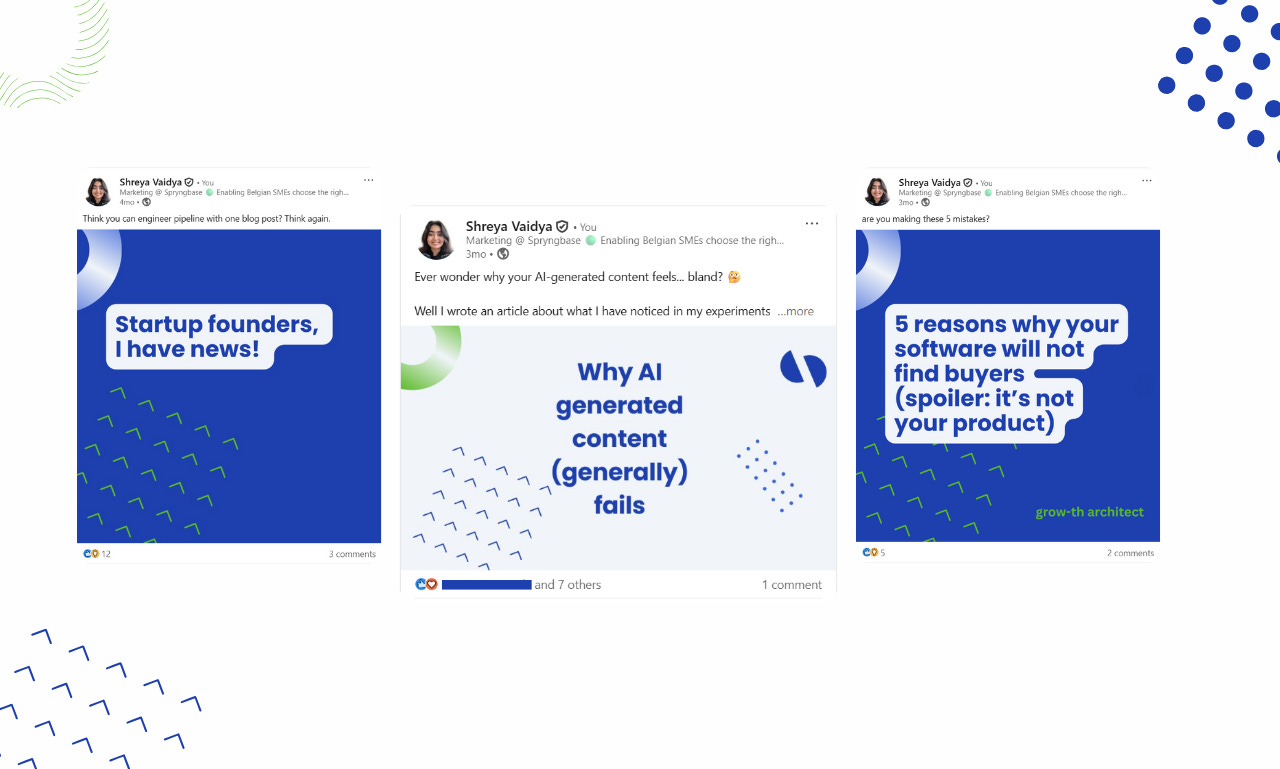
Average impressions: 672
Average engagement: 9
After: Talking about my experiences with candid photos
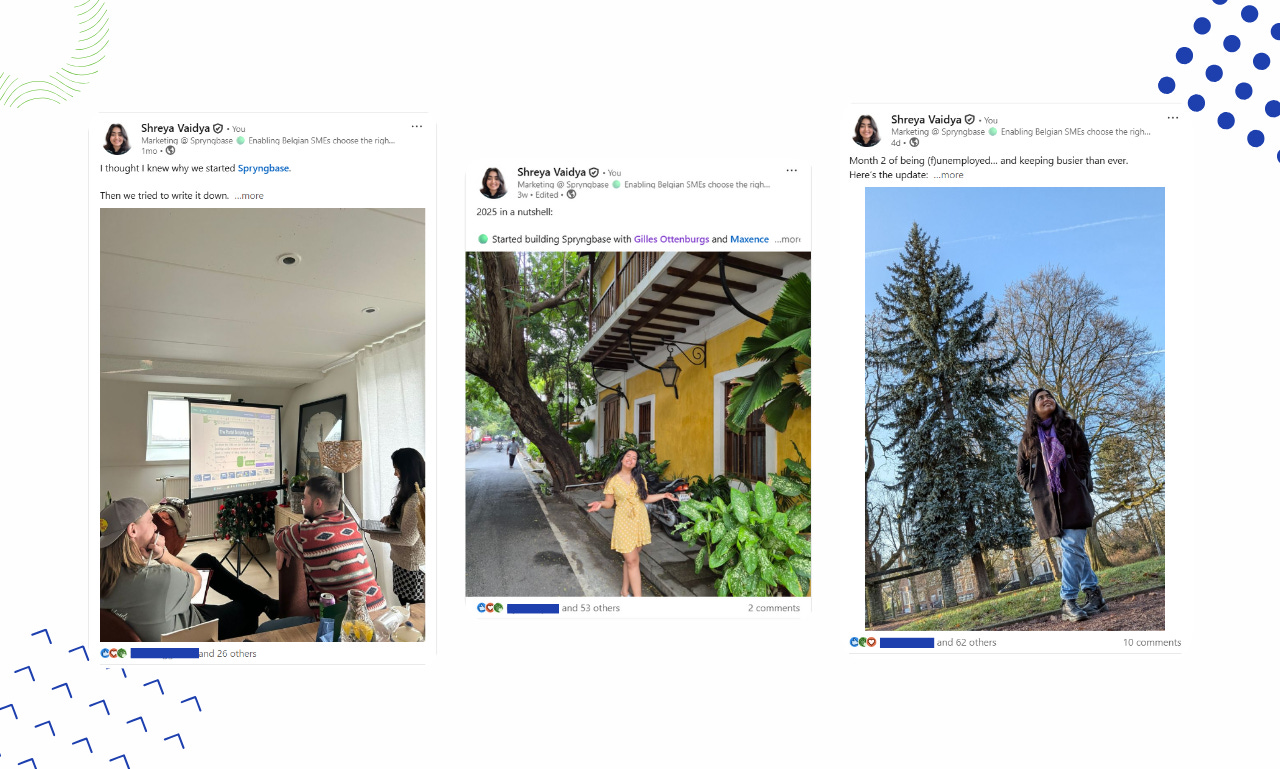
Average impressions: 1,673 (+149%)
Average engagement: 30.5 (+239%)
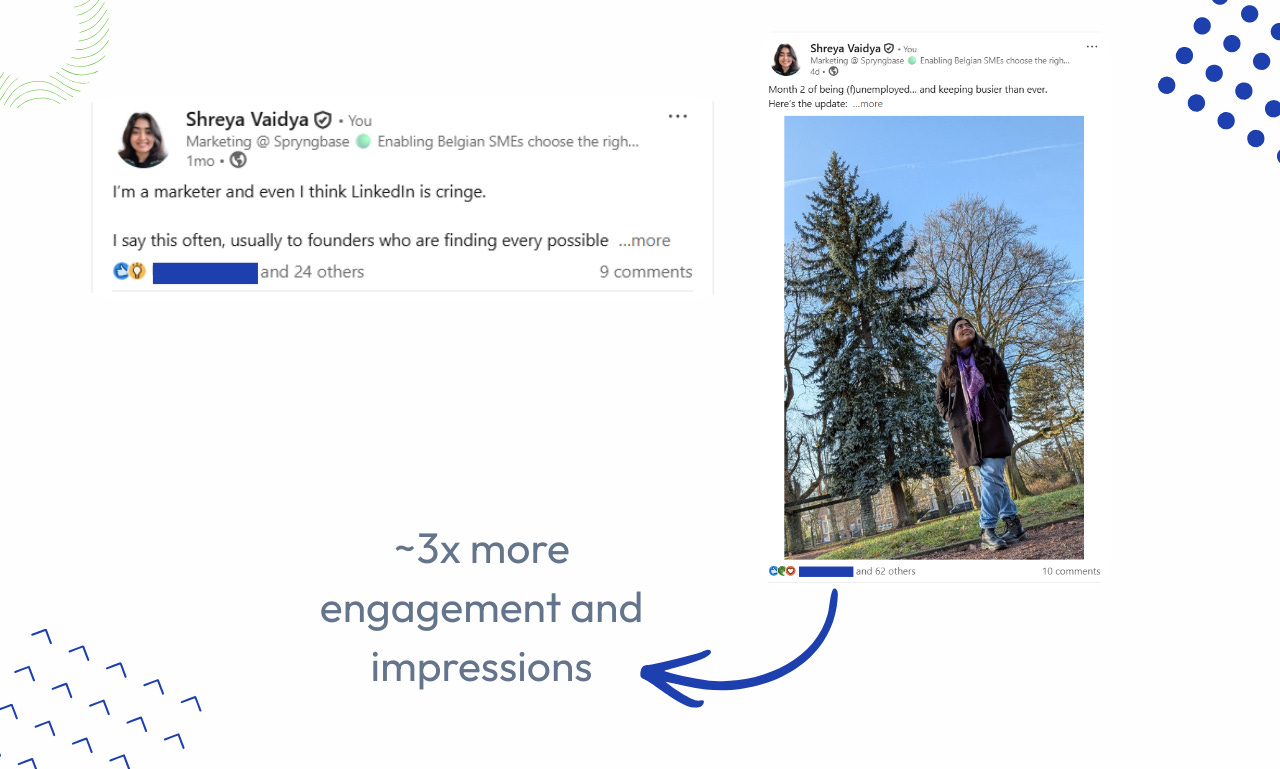
The discomfort. The cringe… ugh I hate seeing my own face on LinkedIn. It feels performative and narcissistic. But of course, being a marketer I follow the data. And the data doesn’t lie: My top post (3,931 impressions, 66 engagements) is a picture of me in a park talking about how I have been working and keeping busy while technically being ‘unemployed.’
Another interesting comparison is between the best performing post without an image of me and the best performing post with an image of me. There is a giant gap between the two in terms of impressions and engagement.
Change 2: Taking a Reflection Approach Rather Than a Contrarian One
LinkedIn has evolved a lot. There were a few key types of content that were popular on LinkedIn from 2021–2024. These were mainly Contrarian or Regenerative content.
Contrarian content is when you take a strong (sometimes controversial) stand against the wave of commonly believed truths. For example: “LinkedIn is going to die in 2027.” This is followed by either an elaboration of the strong opinion itself or a softening of the original point made. They’ve been very effective at grabbing attention and have been a key part of what a lot of LinkedIn creators have used to attract eyeballs and engagement.
Regenerative content is the other format that has worked—i.e., “Comment ‘Claude’ to get my list of Claude prompts.” Basically posts where you have to engage or act to get something of value in exchange. I was never a fan of this type of content, tbh. It feels a bit manipulative.
But as people started using these tactics more and more, LinkedIn users grew fed up. Lately I’ve been noticing that personal stories and reflective content has been resonating a lot more with my LinkedIn audience, at least. I also feel more comfortable expressing my view on something rather than declaring something the objective truth—which is what contrarian posts tend to do.
Contrarian invites argument. Reflection invites conversation.
Psst… I love books! If you are enjoying my content here, then feel free to support me by buying me a book 🥺👉👈
What This Means for You
This isn’t just about me. Personal brands categorically outperform company brands on LinkedIn. As per Wynter’s research from 2024, 77% of B2B buyers engage more with content from a person versus a company.
I’m not suggesting you become an influencer. That’s the opposite of my point. Moreover I am unsure about how long the trend of ‘putting your own picture up to grab attention’ is going to last.
But in any case if you’re building thought leadership, your face and your authentic experiences matter more than generic advice. Break down the wall of believing that B2B needs to be a certain way. Today, everyone is looking to connect with a person and a brand—and having a personal brand is ultra crucial if you want to build something meaningful for your business.
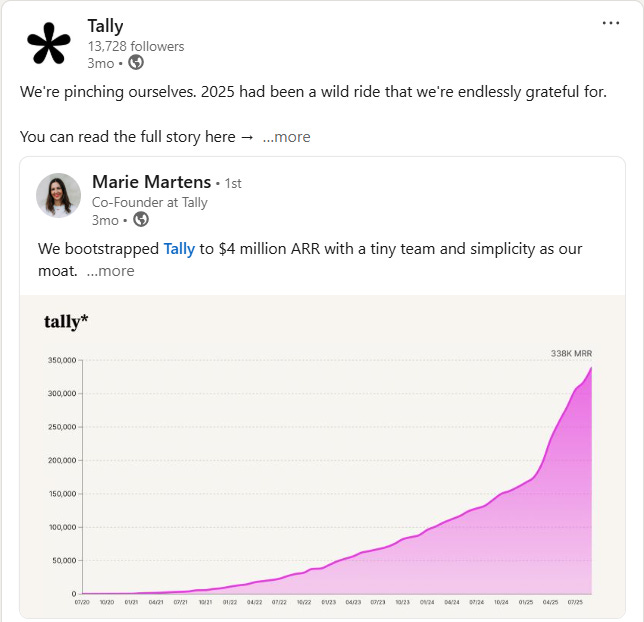
Marie Martens (Co-Founder of Tally) does this brilliantly for Tally on LinkedIn. Tally also has a great presence on Reddit. They listen to user feedback and engage with them. Their business is truly human to human.
The same can be said about Jess Cook from Vector. She allows her audience to get a sneak peek into the marketing decisions that Vector takes by way of her podcast (cleverly titled This Meeting Could’ve Been a Podcast).
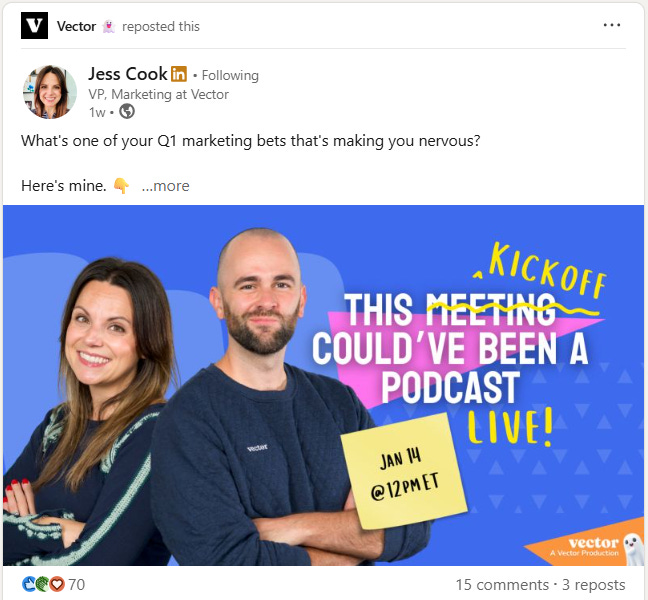
The days of contrarian content are well gone. If you want to be relevant on LinkedIn today then focus on sharing your experiences, focus on meeting new people and learning from them.
People care about stories, so give them one to care about.
Shreya, what are your opinions about documenting journey on LinkedIn? Will that get someone growth without any paid plan?