

LinkedIn Is Cringe: A Guide for Founders Who Feel the Same
I help founders build personal brands on LinkedIn. I also find most of LinkedIn genuinely cringeworthy.

I’m a Marketer and even I think LinkedIn is cringe.
I post maybe 2-3 times a week when every LinkedIn guru insists I should be posting daily or at least 4 times a week. I’ve also succumbed to ‘writing’ (generating?) AI slop that made me wince when I reread it. I am, in many ways, part of the problem I’m about to describe.
The thing about LinkedIn is, it keeps me coming back. And if you’re a founder who’s been avoiding this platform because the whole thing feels performative and slightly unhinged, trust me I get it. I really do.
This is a guide for people like us.
I Hate You/I Love You (LinkedIn)
LinkedIn and I have a love-hate relationship. Let me be specific about what bothers me:
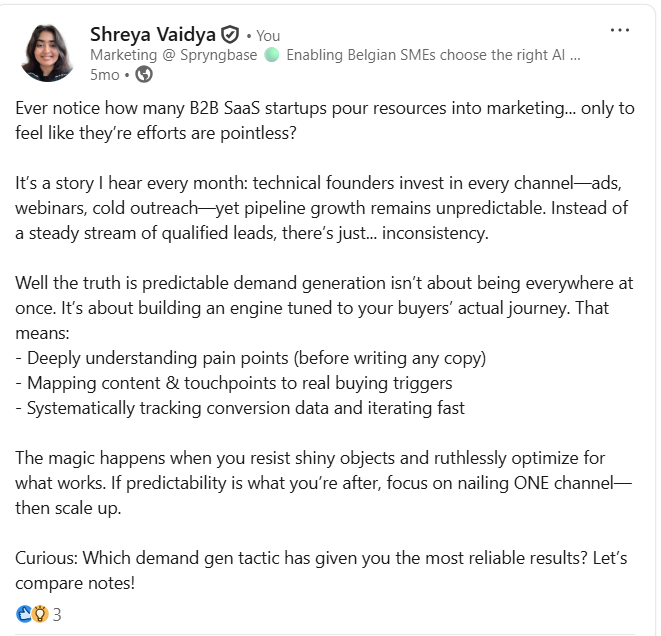
1. The AI slop epidemic. I wrote one of these posts myself, a post about B2B startups pouring resources into marketing. It was fluff. Some of the experiences I had, did form the basis of this post but overall it was a whole lot of words, not a lot of substance. I caught myself becoming the thing I mock, and it was humbling. The results reflected it.
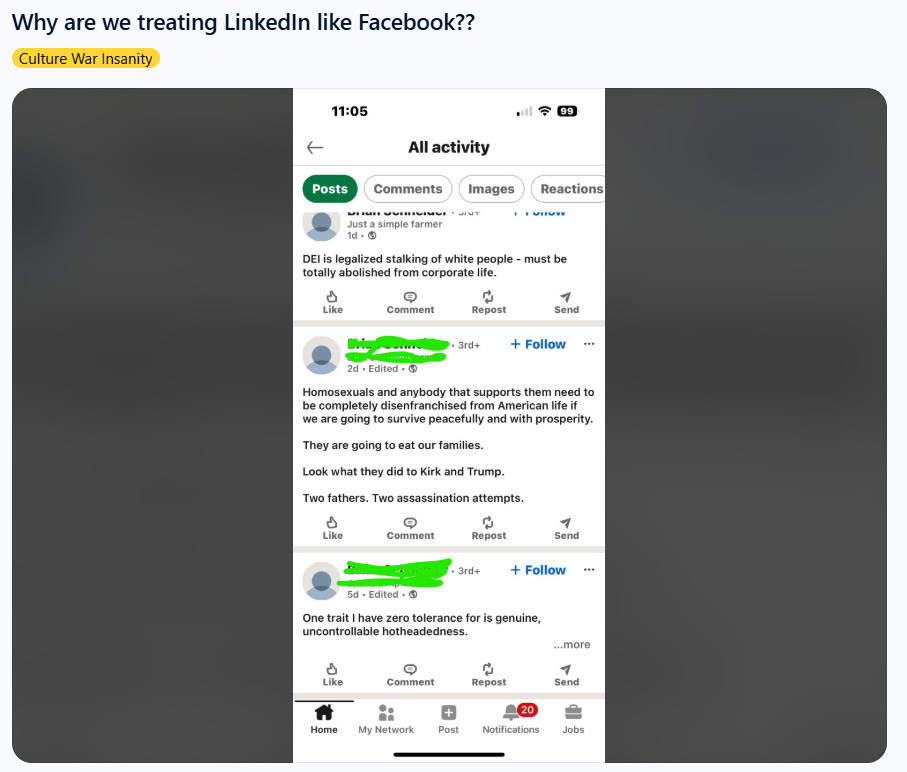
2. The excessive exposure. People sharing things that simply don't belong in a professional environment. I'm not talking about vulnerability here, but rather about people oversharing and somehow linking it to their profession. There's a difference between being honest about your struggles and treating your feed like a Twitter feed.
3. The grind culture worship. “I wake up at 4am and work 18-hour days and here’s why you should too.” The hustle brags. People using burnout as a humble brag. I have news for the posters who do it: IT’S NOT INSPIRING! Abort! Abort!
You can totally believe that this is the right way for you to work but bragging about it on a social media platform? Yeah! No! Don’t do it!
And yes, the classics from r/LinkedInLunatics: the “I fired my best employee and here’s what they taught me” stories, the humble brags about private jets while claiming to be “just like you,” the engagement bait that insults everyone’s intelligence.
I could go on. You know what I’m talking about.
The Climb (Founders)
Founders have it particularly hard. The most common barrier I see is resistance to be vulnerable.
Founders are generally willing to talk about their product. Their brand. The company mission. But their daily activities? Their actual thought process? The failures and pivots and moments of doubt? That is trickier to share.
The paradox is that this is exactly what works on LinkedIn. LinkedIn is a social media platform where people want to learn more about you. Not your product features. Not your company’s latest press release. You.
This is difficult for most founders. The emotional barrier for founders is being honest and candid (truly candid). The practical barrier is being consistent, maintaining a streamlined way of extracting content from your actual life, and holding yourself accountable to showing up.
That’s astonishing when you think about it. And terrifying. And why so many founders either avoid the platform entirely or retreat into safe, forgettable corporate-speak that generates zero engagement.
Books fuel content📖📖 If mine helps you,throw one my way?
The Real Thing (Great Founder Brands on LinkedIn)
There are people with engaging personal brands, these are people whose content I genuinely look forward to seeing. What separates them from the lunatics?
Yasser Elsaid is a great example of how to build-in-public while making people excited about your company’s journey. He shares his goals, his team’s updates and his own experiments.
Marie Martens does build-in-public content about her brand’s journey, from growing it bootstrapped with a small team to reaching $4million ARR. It’s real, and you learn something from every post.
Amlan Suryabanshi focuses on consistency and his personal journey. It’s simple. It’s engaging. It’s showing up regularly with honest observations.
The common thread? Honesty, consistency, and real substance over performance.
None of them are trying to go viral. None of them are using engagement bait or posting motivational platitudes. They’re just... being themselves, systematically, over time.
It sounds simple. It’s not.
I Confess
I should be honest about where I actually am with all this.
I am not consistent. I post less than I should, and I know it.
I use AI to help me (a lot!) But I’m also cognizant of making sure I continue to write myself, to keep my own thinking sharp, to use the words and phrases that are mine. AI is a tool, and a thought partner, but it is most definitely not a replacement for having actual thoughts.
It’s not always easy to come up with new ideas. I try to use different sources for inspiration, and I document every idea that sparks something in me (even if I don’t know what to do with it yet.)
The content extraction process is ongoing and imperfect.
Right now, I’m working on building the personal brands of my co-founders at Spryngbase alongside my own. It’s a strange position to be in tbh, helping others show up authentically while still figuring out my own approach. But maybe that’s the point. Nobody has this fully figured out.
Take Action
LinkedIn is cringe when people aren’t being real.
The humble brags, the AI slop, the grind culture worship, the excessive exposure—it all stems from the key idea of being impressive rather than honest.
But if you show up honestly (even if it is inconsistent) that is what will set you apart. The best content creators are not necessarily more talented at creating content; rather, they are more willing to be honest, vulnerable, and consistent.
I’m still working on this. You probably are too.
If you’re a founder trying to figure this out, I’m doing the same thing publicly at Spryngbase. No promises I’ve cracked the code, but at least we can be inconsistent together.
Hah! You snuck this newsletter in when I took a small break from being online. Linkedin drives me mad. I can't avoid it it's the defacto place to connect with people in events/meetings/etc., but man that algo and the culture there drives me nuts.
Spot on 100%.