

100+ Substack Notes, 3 months, 5 learnings
Notes and how I organize and track them


I mainly write on LinkedIn and Substack (Medium too, but it is mainly a rehash of my Substack content with a new title.) What I find interesting is the contrast between the content that works on LinkedIn versus Substack. Being a content marketer, I aggressively track the metrics of engagement and growth in followers/subscribers across both platforms.
The finding that surprised me most when I ran this audit was just how different it is from LinkedIn. Substack still accepts a lot of generic advice via notes, which LinkedIn has definitely stopped encouraging or rewarding. That contrast alone made pulling the data worth it.
So here it is. An analysis of my 108 notes and this is what I found.
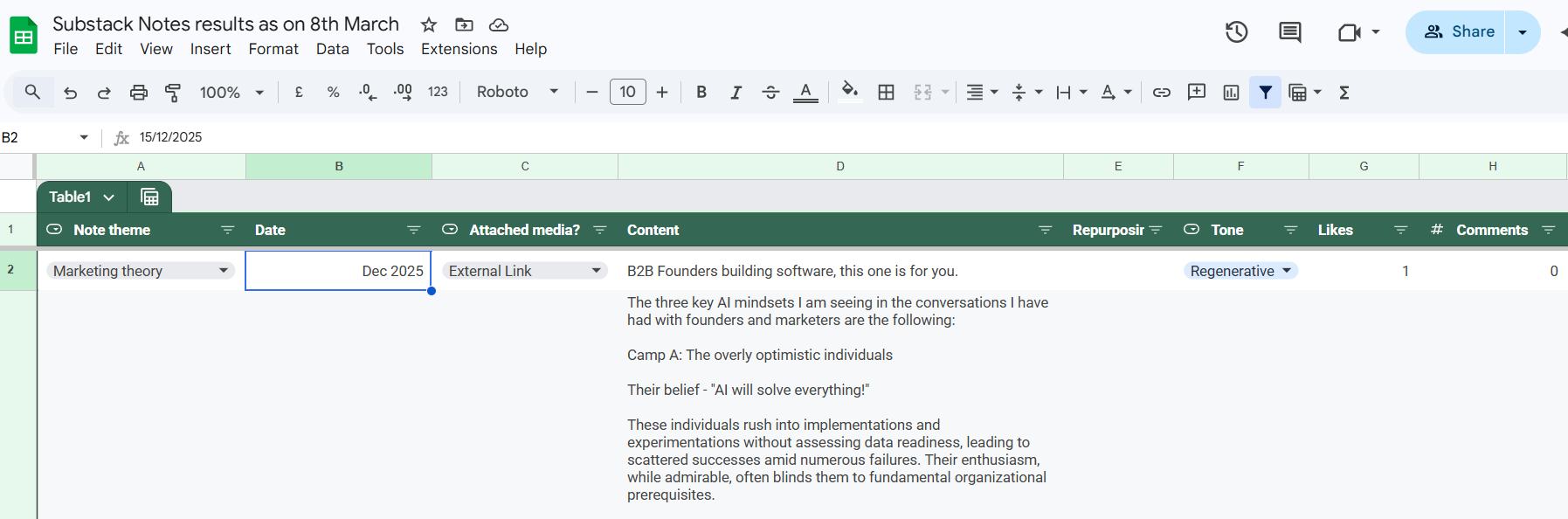
How I organize my notes
I categorize each note I create based on three elements:
Theme: Marketing theory, Opinion, Personal Experience/Story, AI theory, Observation, Other
Stance: Contrarian, Reflection or Reflective, Regenerative
Note: You can read about Contrarion vs Reflection content here -I analyzed my LinkedIn posts
Media: Link, No media, Image, Meme, Video
This classification helps me create notes that match my positioning and also helps me discover what types of notes work better than others. It is a simple system, but running it across 108 notes reveals patterns you cannot see post by post.
The honest caveat before the data
Every time I run this exercise, the imposter syndrome looms large. I am afraid of failing or performing poorly or just chasing algorithmic clout. There is something slightly absurd about analyzing your own content the way you would analyze a client’s content (you see the gaps clearly, and the gaps are yours.)
I am sharing this data because it is useful, not because I have solved the puzzle.
P.S. If you want a shortcut: I put together 13 note templates based on these patterns for just $1.
Bonus: It also includes the note that helped me gain 120 subscribers.
Five learnings from 108 notes
42
Maybe Douglas Adams was onto something when he wrote The Hitchhiker’s Guide to the Galaxy and claimed 42 was the answer to the Ultimate Question of Life, the Universe, and Everything.
In my case, 42 words is the median word count of my top 15 performing notes. I have excluded some outliers (which I will explain further below.) I found that the length of notes matters. The 21–50 word range is my grow-th (pun intended) engine.
Long notes are not a death sentence, but only for one content type: personal stories. My 100+ word notes that perform well (25–52 likes) are all raw personal stories: quitting my job, financial anxiety, the Spryngbase month-2 update. The content earns the length.
2. When you write Marketing theory, be Contrarian
This is the most actionable single fix in the dataset. Marketing theory + Contrarian averages 10.11 likes. Marketing theory + Reflection averages 6.36 likes. Same content type, different tone, 59% gap. The audience responds when I challenge something, not when I guide them.
“Here’s how to think about your ICP” lands worse than “Most B2B teams treat their ICP like a time capsule.”
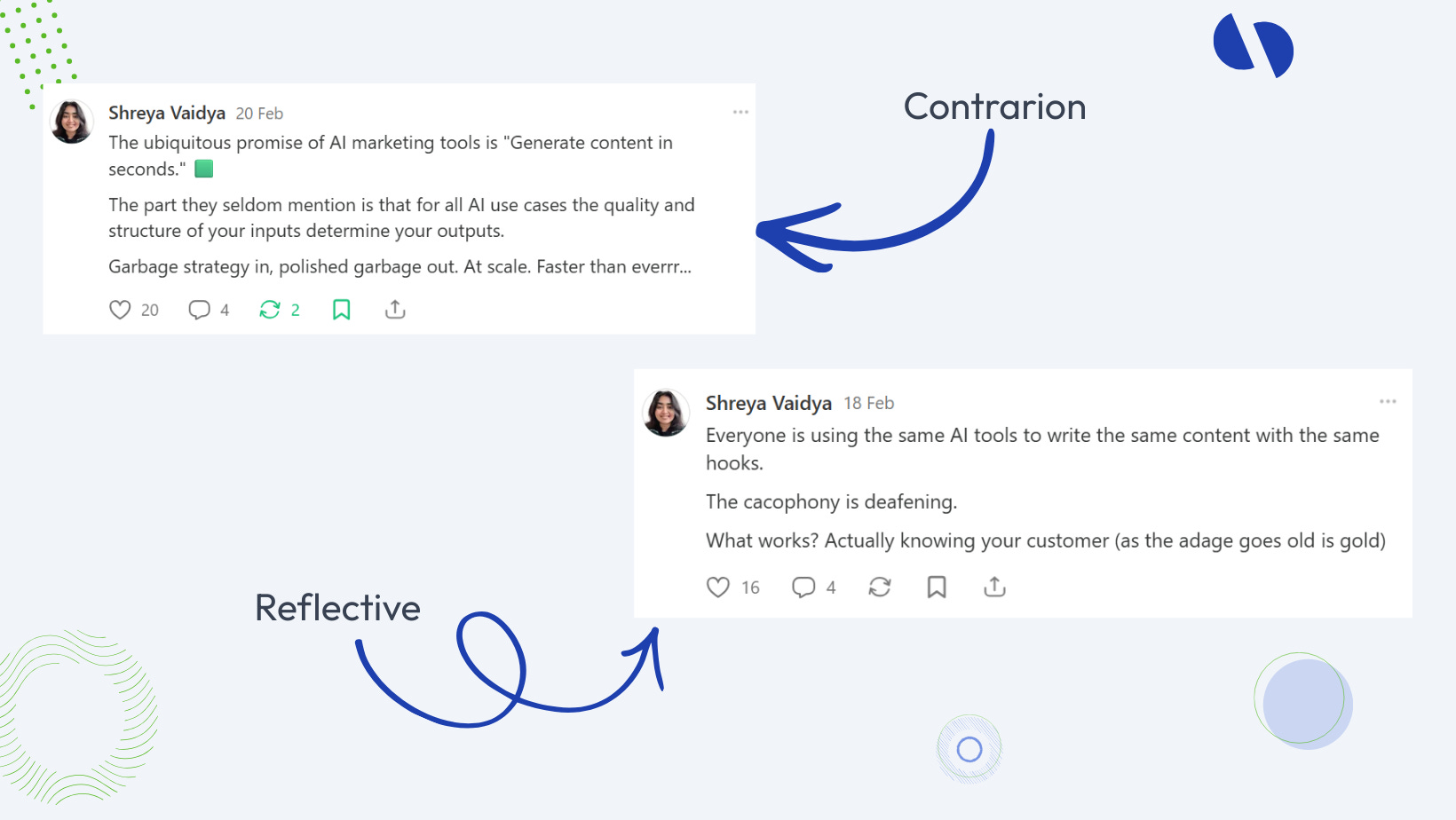
Note: You can read about Contrarion vs Reflection/Reflective content here -I analyzed my LinkedIn posts
3. Likes, comments, and subscribers come from three different kinds of posts for me
In my case, they are not the same metric and they should not be optimized the same way:
Likes come from AI theory and insight-dense notes
Comments come from personal vulnerability with specifics — job exit, financial anxiety, Spryngbase chaos. My top 2 comment notes are both raw “here’s what’s actually happening” posts, not marketing theory
Subscribers come from community/connection posts and AI theory hooks. One “connect me with” note drove 69 subscribers alone
I just don’t want to overuse one theme and let the algorithm decide my content purely. I want to experiment with different elements of my positioning. But conflating these three metrics is leaving all of them on the table simultaneously.
4. “Most [group] [misconception]” is my most reliable opening formula
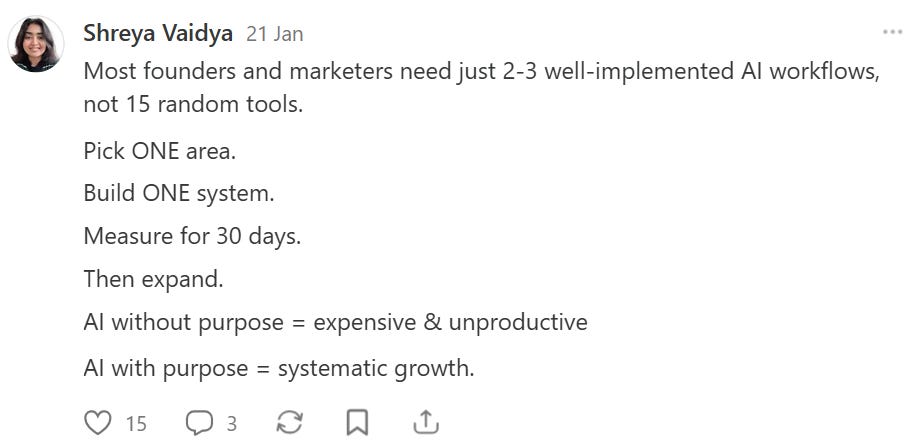
Four notes open with “Most” and average 12.75 likes. “Most early tech founders treat Sales & Marketing like a mysterious engine.” “Most founders and marketers need 2–3 AI workflows, not 15 tools.” The structure is replicable: name the group, name the wrong belief, land the diagnosis in 35–50 words. I have used it 4 times. That underuse is its own data point.
5. Engagement and views are softening — but the cause is content mix, not content quality
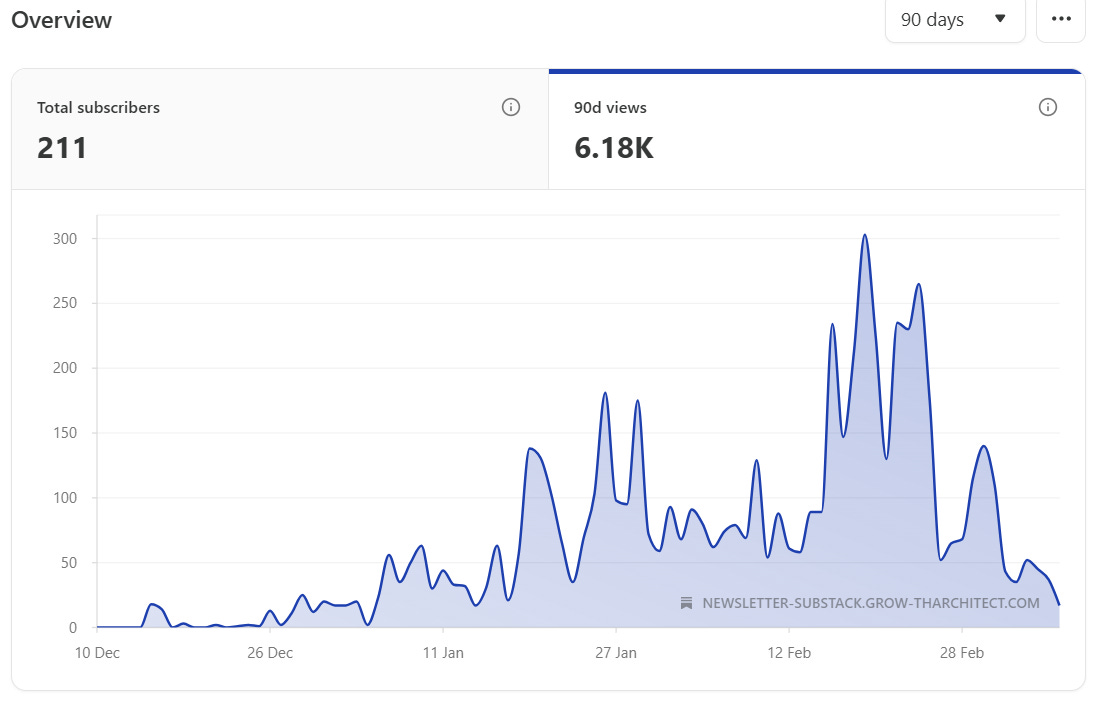
My last 20 notes averaged 8.1 likes versus 9.55 for the prior 20. The reason is visible in the data: more Opinion and Observation notes (my two weakest themes at 6.83 and 5.20 average likes) and fewer AI theory notes in recent months. The fix is simple, write more of what already works.
I know, however, from being active on LinkedIn that “what works” keeps changing. So I don’t want to go down the rabbit hole of creating the same type of content indefinitely.
The desire to experiment and create new things is real. The data is patient about this. The content quality is there. The mix can be better.
A note on measurement
I am not sure how many people even think about their content in these metrics. For most people it is just about being consistent, and that is completely fine. Not everything needs to be analyzed so intently.
I do it because it is a professional hazard of being a content marketer. Measurement is everything.
In fact, my most valuable content type is the one I post least
AI theory + Reflection is my best-performing combination at 16.2 average likes across only 5 notes. Compare that to Marketing theory, where I have published 27 notes averaging 7.11 likes. Most of my volume is going toward my third-best content type.
Why haven’t I leaned into it more? I just don’t want to let the algorithm purely dictate my content. AI is a trend for the next few years to come before it becomes normal — but my personal brand and positioning shall remain. The Spryngbase work gives me an endless supply of AI theory material. I am sitting on it and not always using it. That is a deliberate choice, not an oversight.
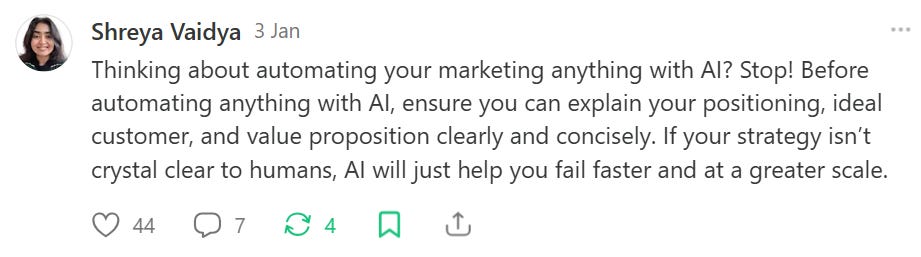
To try and balance out more with content that works and that doesn’t, and to try and understand what your subscribers want from you by directly talking to them — that is the actual work underneath the numbers.
108 notes just signals consistency. For me it is just about keeping on going and trying out different things.
If you want a head start
If you are building a B2B SaaS or AI presence on Substack Notes, these 13 templates give you the framework without the reverse-engineering. Based on the patterns above, for just $1. The note that brought me 120 subscribers is in there too.
This is highly valuable because it's grounded in real-world experience, not just theory. Also, inspired me to write a build-in-public post myself 😅
100 Notes in 3 months is solid consistency. Did you batch-write them or come up with ideas daily? I tried batching for a week and the quality tanked because everything started sounding the same.